October 06, 2026
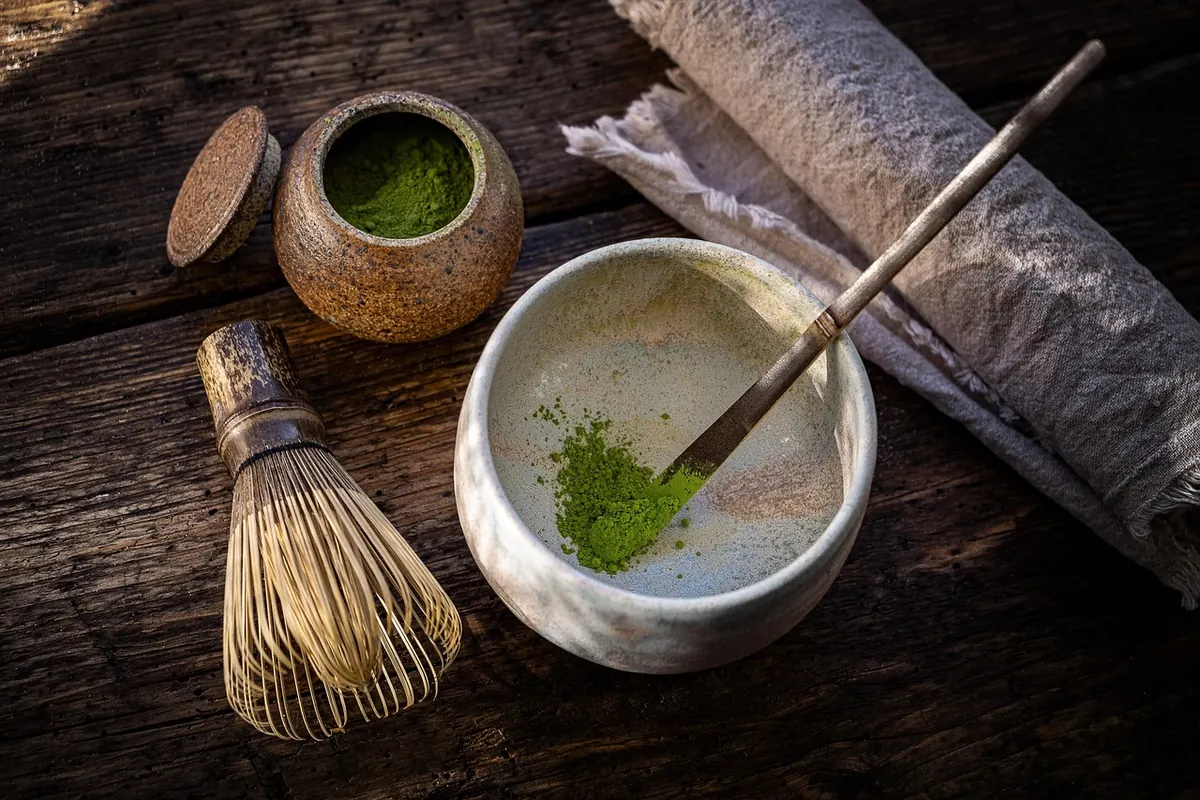
Matcha has a way of dividing people. One bowl tastes like sweet grass and cream; the next tastes like a lawn clipping soaked in hot water. The difference is rarely the drinker's palate. It comes down to grade, freshness, and about thirty seconds of technique — all of it worth knowing before you spend money on a tin.
What Matcha Actually Is
Matcha starts as green tea, but not the kind you steep and throw away. A few weeks before harvest, growers cover the bushes to block most of the sunlight. The leaves respond with more chlorophyll, which deepens their color, and more L-theanine, the amino acid behind that savory, almost brothy sweetness. After picking, the leaves are steamed, dried, and stripped of stems and veins to make tencha, which is then ground — traditionally between granite stones — into a fine powder.
Because the powder stays suspended in the water, you drink the whole leaf. The color, the flavor, the caffeine: none of it gets left behind. That's why a bowl of matcha feels so different from a cup of steeped green tea, and why the quality of the leaf shows up so plainly.
It's not just powdered green tea
Plenty of products sold as matcha are green tea milled fine and nothing more. The shading, the de-veining, and the slow stone grinding are what make matcha matcha. If the price seems impossibly low, that's usually the reason. Real stone grinding is slow — a traditional mill might produce only 30 to 40 grams an hour — and the friction has to be managed so the powder doesn't heat up and lose its bright flavor. That care is part of what you're paying for.
Color is a clue. Fresh, well-made matcha is a vivid, almost electric green. Dull olive or yellow-green powder has often oxidized, aged, or started from lower-grade leaves. It may still work in a smoothie, but it won't give you the sweet, creamy bowl that made you curious in the first place.
Ceremonial, Culinary, and What the Labels Really Mean
Ceremonial and culinary describe intent more than a legal standard. Neither term is regulated, so treat them as useful shorthand rather than a guarantee.
Ceremonial grade comes from the first harvest and the youngest leaves, with stems and veins carefully removed. It's ground slowly and meant to be whisked with hot water and drunk on its own. Expect vivid color, a sweet, creamy body, and almost no bitterness.
Culinary grade — sometimes called ingredient grade — uses later harvests and more mature leaves. It's more astringent, less sweet, and usually cheaper. It's designed to be mixed with milk, sugar, or fruit, where its sharper edge can hold its own. Think matcha lattes, smoothies, ice cream, and baking. Using ceremonial grade in a sweet latte is not a crime, but it's an expensive way to hide the qualities you paid for.
Between those two poles are the labels you'll see most often: premium, daily, latte grade, or barista grade. These are marketing terms, but they can be helpful. A good "daily" matcha might have enough sweetness for plain drinking and enough backbone for a latte. Ask the seller how they recommend using it. A shop that can answer that question clearly usually knows its leaf.
How to Read a Matcha Label
- Origin: Uji in Kyoto is famous, but excellent matcha also comes from Nishio, Kagoshima, Shizuoka, and other regions. Origin alone doesn't guarantee quality, but it tells you the producer is proud enough to name the place.
- Harvest: First harvest (ichibancha) is usually sweeter and more vibrant. Later harvests tend to be more astringent and better for blending.
- Stone-ground: This suggests a slower, cooler milling process. It isn't everything, but it often means a finer, less scorched powder.
- Organic: Important if you care about farming practices. It is not a flavor guarantee.
- Harvest date or best-before: Matcha is perishable. A recent harvest date is far more useful than a best-before date two years away.
Words like "ceremonial" are marketing, not law. The label can point you in the right direction, but the color, smell, and taste in the bowl are the real test.
What Matcha Should Taste Like
Good matcha is not bitter by nature. It can be intense, grassy, and umami-rich, but it should also have sweetness and a creamy texture. Bad matcha tastes flat, dusty, fishy, or like hay. Bitterness often comes from old leaves, water that's too hot, or simply using too much powder.
Flavor terms you'll see include sweet grass, edamame, cream, marine, brothy, and vegetal. If your bowl tastes like a lawn clipping soaked in hot water, that's usually low grade, stale leaf, or brewing water that was closer to boiling than you thought.
How to Prepare Matcha (Without the Ceremony)
You don't need a tea room. You need a bowl, a whisk, and about two minutes. Here's the basic method.
- Sift 1–2 teaspoons (about 2 grams) of matcha into a bowl. Sifting breaks up clumps. If you skip it, you'll get dry pockets that no whisk can fix.
- Heat water to about 160–175°F (70–80°C). Boiling water scalds matcha and brings out bitterness. If you don't have a thermometer, boil and let it sit for 3–5 minutes.
- Add a small amount of water first — about 2 ounces. Whisk into a paste to eliminate lumps.
- Add the rest of the water — another 2–4 ounces for a traditional bowl, or more for a thinner drink.
- Whisk briskly in a W or M motion with a bamboo chasen or a milk frother until a fine foam forms. Don't press the whisk into the bottom; move it across the surface.
- Drink immediately. Matcha settles. If it sits, swirl or whisk again.
For a latte: whisk a strong shot of matcha with a little hot water, then add steamed milk. Oat and whole milk work especially well. Sweeten sparingly at first, so you can still taste the leaf.
Common Mistakes
- Water too hot. This is the fastest way to make good matcha taste cheap.
- Too much powder. More matcha isn't more flavor; it's more bitterness and grit.
- Not sifting. Clumps sink and leave a chalky finish.
- Old matcha. Once opened, matcha fades within weeks. Buy small tins, not giant bags.
Freshness and Storage
Matcha is fragile. Oxygen, light, heat, and moisture all degrade it. Keep it in an airtight container, ideally a small tin, in a dark, cool place. The fridge can work, but only if the container is truly sealed and you let it come to room temperature before opening; otherwise condensation ruins it. Don't store it next to spices or coffee, because matcha absorbs odors easily.
A fresh matcha smells sweet and green. If it smells like hay or dust, it's past its prime. You can still bake with it, but don't expect a beautiful bowl.
Caffeine, L-Theanine, and the Buzz
Matcha contains caffeine — roughly 30–40 mg per half-teaspoon, depending on grade and amount. But the caffeine comes with L-theanine, the amino acid produced during shading. L-theanine promotes calm focus, which is why matcha's lift often feels steadier and less jittery than coffee. It's not caffeine-free, though. If you're sensitive, drink it earlier in the day and start with a smaller scoop.
Buying Your First Tin
Start with a small amount. If you want to drink matcha plain, buy a small tin of ceremonial or premium grade from a reputable seller. If you mainly want lattes and smoothies, a good culinary grade will save money and taste fine with milk and sweetener. Avoid bargain "matcha" that's bright neon green with a dusty smell; it's often just powdered green tea or older leaf.
Ask yourself one question: Am I drinking this for the leaf, or for the drink? The answer determines the grade you need.
Good matcha is not a test of endurance. It should taste sweet, savory, and alive — not like punishment.
Once you find a tin you like, write the harvest date on the lid and use it within a few weeks. Matcha rewards attention: a little sifting, a lower water temperature, and a quick whisk can turn a bitter green drink into something you actually crave.
Photo: mirkostoedter / Pixabay